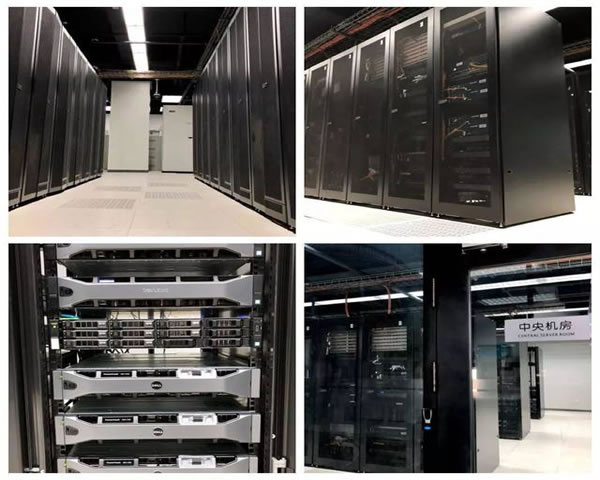
Introduction: Choosing a Japanese cloud server is not only about performance and compliance, but also directly affects the cost structure. From the perspective of cost control, this article systematically takes stock of the characteristics of Japan Cloud Server, and provides practical cost-saving techniques to help enterprises achieve a balance between performance and cost when deploying in Japan.
Overview of the main features of Japanese cloud servers
Japanese cloud servers typically feature low-latency local networks, stable infrastructure, and support for local compliance. From a cost perspective, these features both bring value and impact the expense structure, with high-availability deployments and local bandwidth requirements increasing expenses, for example. Understanding these characteristics can help develop more targeted cost control strategies.
The impact of network latency and geographical advantages on costs
Japan's geographical location has obvious latency advantages for users in the Asia-Pacific region, which can reduce request response times and improve user experience. However, in order to ensure low latency, it is often necessary to deploy in multiple availability zones in Japan or use dedicated line connections, which will bring additional bandwidth and cross-region communication costs. Weighing latency versus cost is an important decision point.
Cost considerations for compliance and data sovereignty requirements
When operating in Japan, data privacy and compliance requirements may require data to be kept locally or to use specific encryption and auditing features. Compliance often means additional investment in storage, security and operations, increasing the total cost of ownership. Assessing the scope of compliance in advance can avoid large investments later.
The cost structure and billing model of Japanese cloud servers
Understanding the billing model is a prerequisite for controlling costs. The cost of Japanese cloud servers generally includes computing, storage, bandwidth, backup and management services. Different billing models (on-demand, prepaid or annual, billing based on traffic, etc.) have a direct impact on budget flexibility and long-term costs. Choosing the right combination can significantly save expenditures.
The impact of on-demand, reserved and annual billing on the budget
On-demand billing is flexible but has high long-term costs; the reservation or annual subscription model can reduce unit cycle costs under stable load. Enterprises should adopt a hybrid strategy based on load fluctuations and budget cycles: use reserved or annual subscriptions for stable basic loads, and make up for peak loads through on-demand capacity expansion to balance flexibility and cost.
Key savings tips for cost control
A variety of strategies can be used to implement cost control in Japan: reasonable selection, elastic scaling, optimized storage levels, bandwidth throttling, automated operation and maintenance, etc. The following provides executable tips based on scenarios to help enterprises reduce cloud expenditures while ensuring business quality.
Model selection and resource rationalization: Determine allocation based on needs to avoid over-allocation
Evaluate performance and capacity first, and select CPU, memory, and disk types based on actual load to avoid long-term idle resources. Use lower-specification instances or shared instances for non-critical or test environments, and regularly audit idle volumes and unused IP to reduce unnecessary expenses from the source.
Automatic scaling and monitoring: pay on demand, precise control
Using automated scaling and indicator-based triggering strategies, the capacity can be automatically expanded during traffic peaks and reduced during idle times to avoid maintaining high-configuration instances for a long time. Combined with alarm and cost monitoring tools, abnormal expense sources can be discovered in a timely manner and governance measures can be taken to achieve more refined expense management.
Network and bandwidth optimization: reduce cross-region and public network traffic
Bandwidth is often the key variable cost in Japanese deployments. Using content distribution, caching, compression, request consolidation, and localized traffic strategies to reduce cross-region and public network traffic can result in significant cost savings. At the same time, evaluate the cost-effectiveness of dedicated lines and public networks, and select appropriate connection methods based on business criticality.
Other savings tips: Compliance strategy and geographic deployment combination
Where compliance allows, non-sensitive data or analytics workloads can be moved to lower-cost proximity or edge nodes. Hybrid multi-region deployment can balance compliance and cost, but it is necessary to consider cross-region communication costs and data consistency overhead, and make balanced choices to optimize overall costs.
Conclusion and implementation suggestions
Conclusion: From a cost control perspective, Japanese cloud servers have the dual advantages of network and compliance, but they also bring costs related to bandwidth and compliance. It is recommended to first evaluate business characteristics and compliance boundaries, adopt combination strategies such as selection optimization, automatic expansion and contraction, monitoring and alarming, and bandwidth optimization, and regularly audit expenses and resources, and continuously iterate cost control measures.
- Latest articles
- Enterprise-level Application Hong Kong Site Group Vps Load Balancing And Backup Solution Analysis
- Seize The Trial And First-month Discount To Realize How To Buy Cheap Servers In Cambodia. Practical Steps
- Advantages Of Vietnam’s Native Residential IP In Regional Data Collection And User Behavior Analysis
- Parameters And Deployment Suggestions For Optimizing The Performance Of Cambodian Cloud Servers For E-commerce Scenarios
- Why Companies Choose Huawei Cloud Server Vietnam For Southeast Asian Market Expansion
- Why Enterprises Choose To Access Hong Kong Servers And Bypass Japan’s Hybrid Cloud Strategy
- Interpretation Of Malaysia Unicom’s Serverless Service From An Operator’s Perspective: Common Causes And Division Of Responsibilities
- Security Control List Helps Enterprises Maintain Access Control For Servers Hosted In The United States
- Construction And Maintenance Why You Should Pay Attention To The Service Provider SLA When Renting A German Server Dedicated Line
- Technical Prevention Improves The Ability Of Enterprises To Resist Attacks Related To Video Of Thailand Computer Room Fraud Incident
- Popular tags
-
Common Application Scenarios And Recommended List Of Adaptation Configurations For Vps Japanese Virtual Host Agents
this article introduces the common application scenarios of vps japanese virtual host proxy, and provides an adaptation configuration and deployment safety list according to website, e-commerce, api, games, etc., to facilitate seo and geo optimization. -

Comparing Long-term Leasing And On-demand Billing, How Much Is It More Cost-effective To Rent A Cloud Server In Japan?
compare the costs and applicable scenarios of long-term rental and on-demand billing when renting cloud servers in japan, analyze the key factors that affect costs and give practical optimization suggestions to help enterprises choose more cost-effective billing methods based on business characteristics. -

Which Cheap Cloud Server Brands In Japan Are Worth Paying Attention To?
explore the cheap cloud server brands worth paying attention to in the japanese market to help you choose the most suitable server solution.